

Ultimate Boot Cd For Windows 8
How to rescue old PCs with Ultimate Boot CD
(opens in new tab)
There'south zippo worse than a auto that seems to have given up the ghost. Windows refuses to boot. Your precious files are locked abroad. And, without proper diagnostic tools, you can't quite figure out what's wrong with the affair, let alone nurse it back to health. That'due south where Ultimate Boot CD (henceforth UBCD) comes in. Cobbled together over the course of some 15 years, UBCD is a bootable collection of the all-time freeware tools for all kinds of rescue tasks.
Yous don't need to run it from a disc—information technology'southward happy enough to run from USB if y'all've long ago cast off the shackles of optical media—and it can exercise just most anything you need, from cloning or selectively copying from dying drives to checking private hardware components to make up one's mind just what's gone wrong with your ailing hardware. While it's been kept upwardly to date as much equally possible, it's worth bearing in mind that many of the tools and drivers in UBCD are geared toward older hardware, and so it's best used to bring life to those long-forgotten laptops; if you're resurrecting a more than mod Windows x machine, effort Microsoft's ain rescue tools get-go.
You'll need this
Ultimate Kicking CD 5.3.7 Download the gratuitous software from here.
USB stick This needs a minimum capacity of 1GB.
Logical first step fourth dimension: In order to utilize the Ultimate Boot CD, you need to be able to boot from information technology. Utilize a working computer to grab the UBCD ISO via ane of the mirrors here (or employ the torrent, if yous're feeling conscientious toward the bandwidth bills of volunteers), and notice either a USB stick with at least 1GB capacity, or a blank CD or DVD if you're going the optical route. Burn down the ISO as you lot would any other—if you don't accept the software, use CDBurnerXP—or write it to USB using Rufus. Make certain you format your USB media using the appropriate option.
Boot from it
Plug in or insert your media into your target machine, and boot from information technology either by setting the kick priority in the BIOS, or by invoking its boot media carte du jour. I tiny prerequisite: If your BIOS is somehow hosed, you may non be able to select the appropriate media manually. You could exist out of luck if this is the case—although UBCD tin help recall lost BIOS passwords—but search online for whatever secret cardinal combinations your hardware manufacturer might accept slipped in, because there's often a way to force a USB or optical kick by property down a modifier on power on.
(opens in new tab)
Check your components
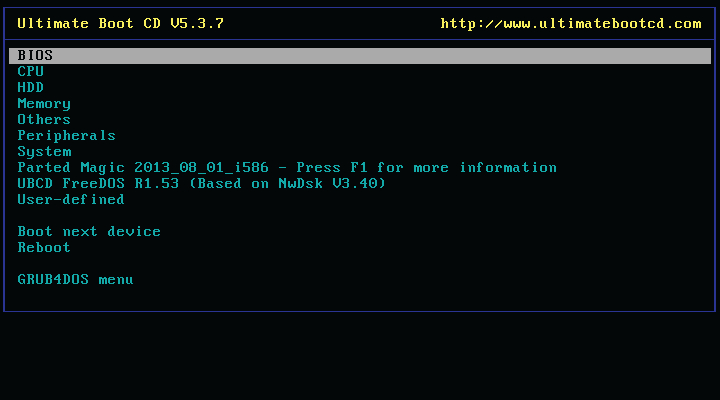
The principal UBCD bill of fare (see image above) is broken upward, usefully, by category. Unless y'all hear that telltale clicking that ways your hard drive is most to breathe its final, it's probably a adept idea to give your hardware a quick in one case-over first of all. The "CPU" menu gives you a chance to test the stability of your processor with a number of stress tests and challenging benchmarks—and if y'all desire a realistic view of your machine's capabilities without the Windows overhead, benchmarking from UBCD is about as close to working on bare metal every bit yous can get.
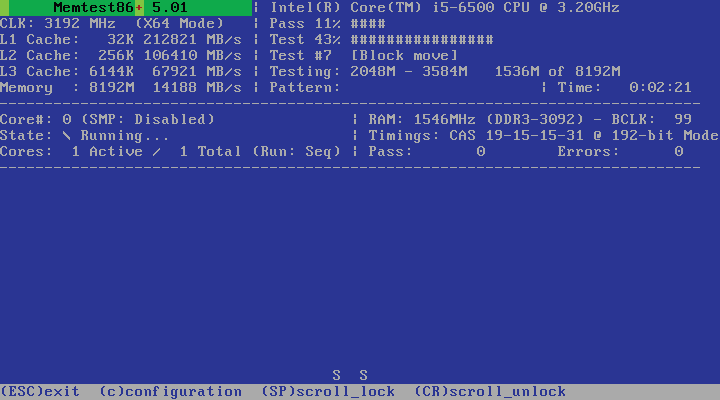
In the "Retention" section, run the failure-detecting Memtest86+ 5.01 (see prototype below) to comprehensively test every byte of your RAM. And if yous don't know what you're working with, a trip to the "System" card and the Hardware Detection Tool will reveal all about your system.
(opens in new tab)
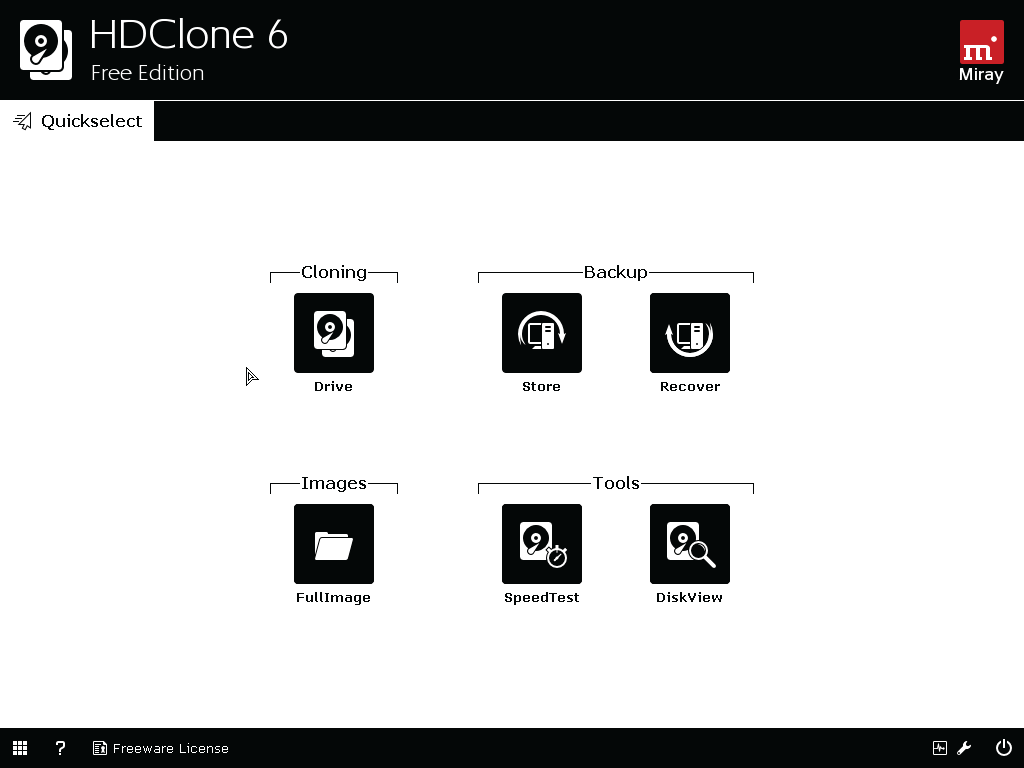
UBCD's area of specialization is its bulldoze tools, and yous'll detect a whole host in the "HDD" submenu. Trouble is, many of these are a fiddling primitive and specific—while there's a long list, information technology'southward mostly ane collated from drive manufacturers through the ages. Dig around and you may find the right tool for your hardware, either to test it or potentially recover it, and it's worth checking out EaseUS Deejay Copy (in "HDD/Deejay Cloning") and the slightly hobbled free version of HDClone (same menu) for their maximum hardware compatibility and graphical interfaces (see prototype below).
Merely for all UBCD's individual tools, you may be better served going with the expert choice: Parted Magic. The version included with UBCD is the final free edition of Parted Magic—the tool jumped to a paid-for program in 2013—but it's perfectly acceptable for fill-in and recovery purposes.
(opens in new tab)
Drive admission
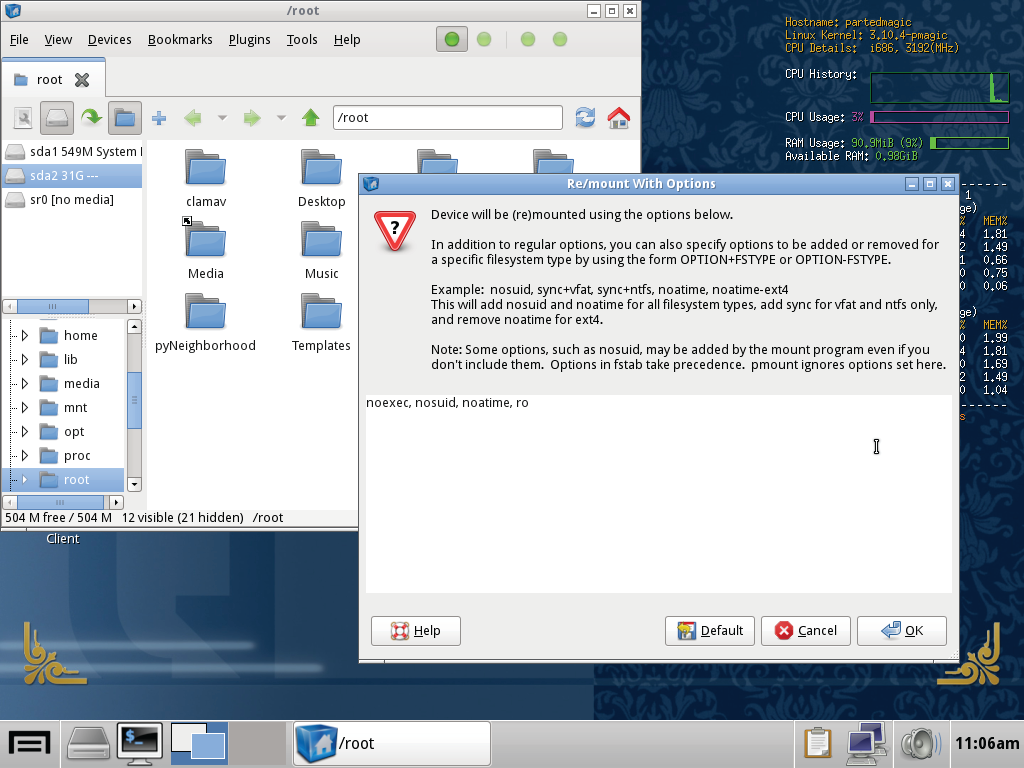
Fire up Parted Magic from the main menu—but select the default "Run from RAM" option—and yous'll accomplish a Linux desktop packed with tools. The File Manager should exist your get-go port of phone call; detect your misbehaving hard drive on the left, correct-click it, and select "Re/mount." Add the pick "ro" to the end of the list (encounter beneath) in society to mount the drive every bit read-only, because presumably we're not hither to break anything, and a Windows install that'south not playing prissy likely won't have shut down properly. You should now exist able to dig effectually in your files; plug in and mount a USB drive, and you'll be able to copy them over.
(opens in new tab)
Clone and clean
Linux app Clonezilla is a smashing tool for swapping out drives—y'all tin can, as its name suggests, exactly clone the contents of one bulldoze to some other. It's on the Parted Magic desktop as "Disk Cloning." With no drives mounted, fire it upward, choose whether you want to dorsum up to an prototype file or practise a bit-to-chip copy of a drive, select "local_ dev" on the next screen, plug in your USB drive, and y'all should exist away. Of course, bankroll up a drive that'south failing not because of hardware but because of some insidious infestation is asking for trouble.
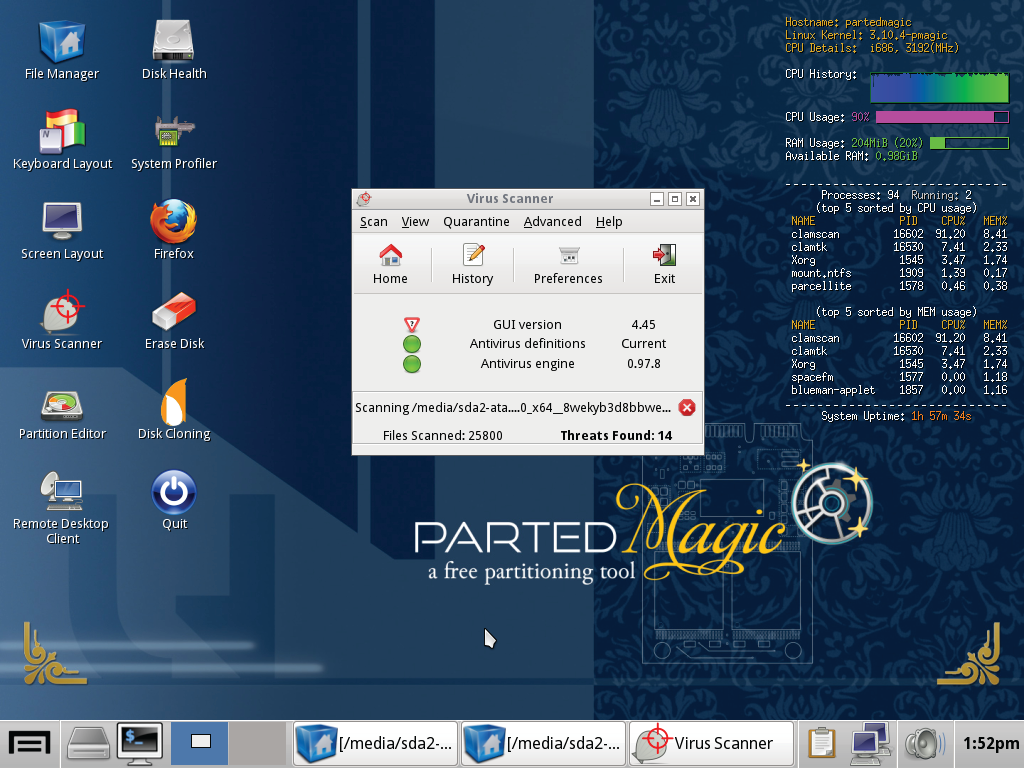
ClamAV—launched via the "Virus Scanner" shortcut on the Parted Magic desktop— automatically downloads the latest virus definition files and, provided you've mounted your target drive with read/write access (see "Password Panic" beneath to observe out how), information technology'll attempt to make clean upward your mucky disk (see epitome below). Run it before you clone for some peace of listen—or after, if you don't think your platter will last that long...
(opens in new tab)
Password panic
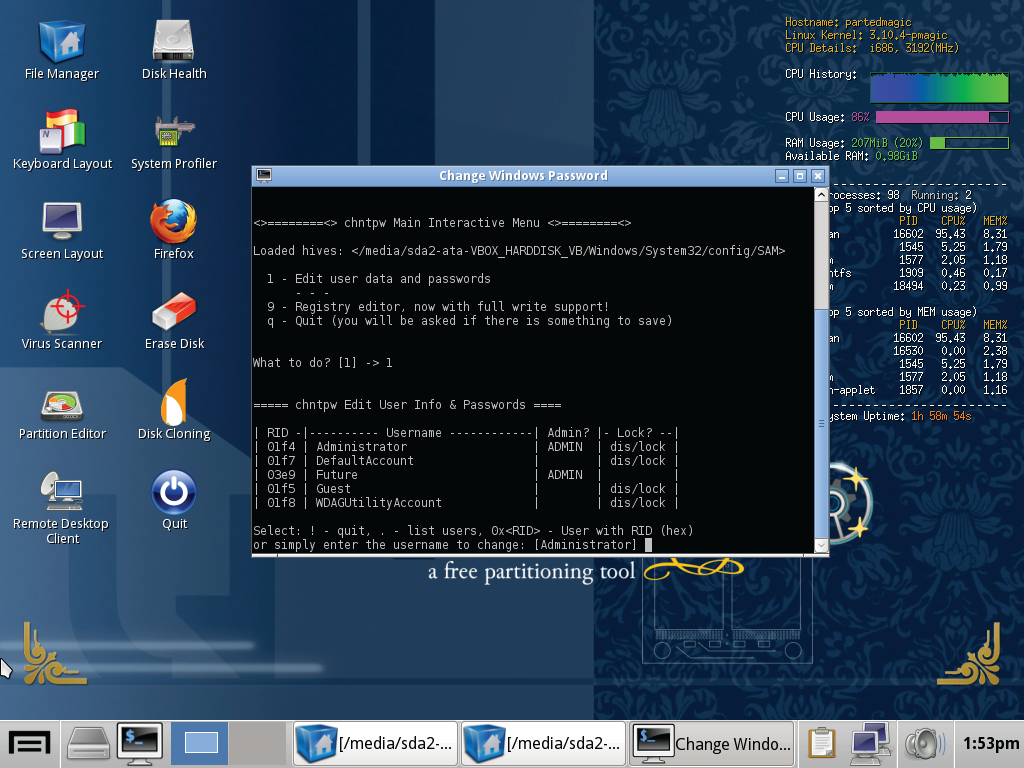
Forgotten your Windows password? Picked upward a new-to-you lot car that's locked down? UBCD can assist. First, you need to do a footling preparation to get Windows out of its default fast boot mode. Only launch Windows as usual, initiate a restart (you don't need to log in), and immediately kicking from UBCD—if you try to admission information technology after a full shutdown, you can only use your Windows bulldoze in read-only style. Launch Parted Magic, mountain your drive in File Manager, caput to the "Organisation Tools" menu via the app launcher in the lesser-left, and open "Change Windows Password."
Select your target hard drive, and employ option i to see a list of the installed users. Enter the username y'all desire to change, and use the appropriate options to articulate the countersign, promote the user to administrator, or unlock an business relationship that may have been stifled past over-zealous admin corruption. Information technology's best not to ready a new password with this tool—just clear it, log in to Windows, and ready a new i from in that location.
This article was originally published in Maximum PC issue 149 (opens in new tab) . For more quality articles about all things PC hardware, you can subscribe to Maximum PC (opens in new tab) now.
(opens in new tab)

Ultimate Boot Cd For Windows 8,
Source: https://www.pcgamer.com/ultimate-boot-cd-guide/
Posted by: richardsoncied1937.blogspot.com
0 Response to "Ultimate Boot Cd For Windows 8"
Post a Comment